September 24, 2026
Senior Living Sales Training & Census Growth Guide

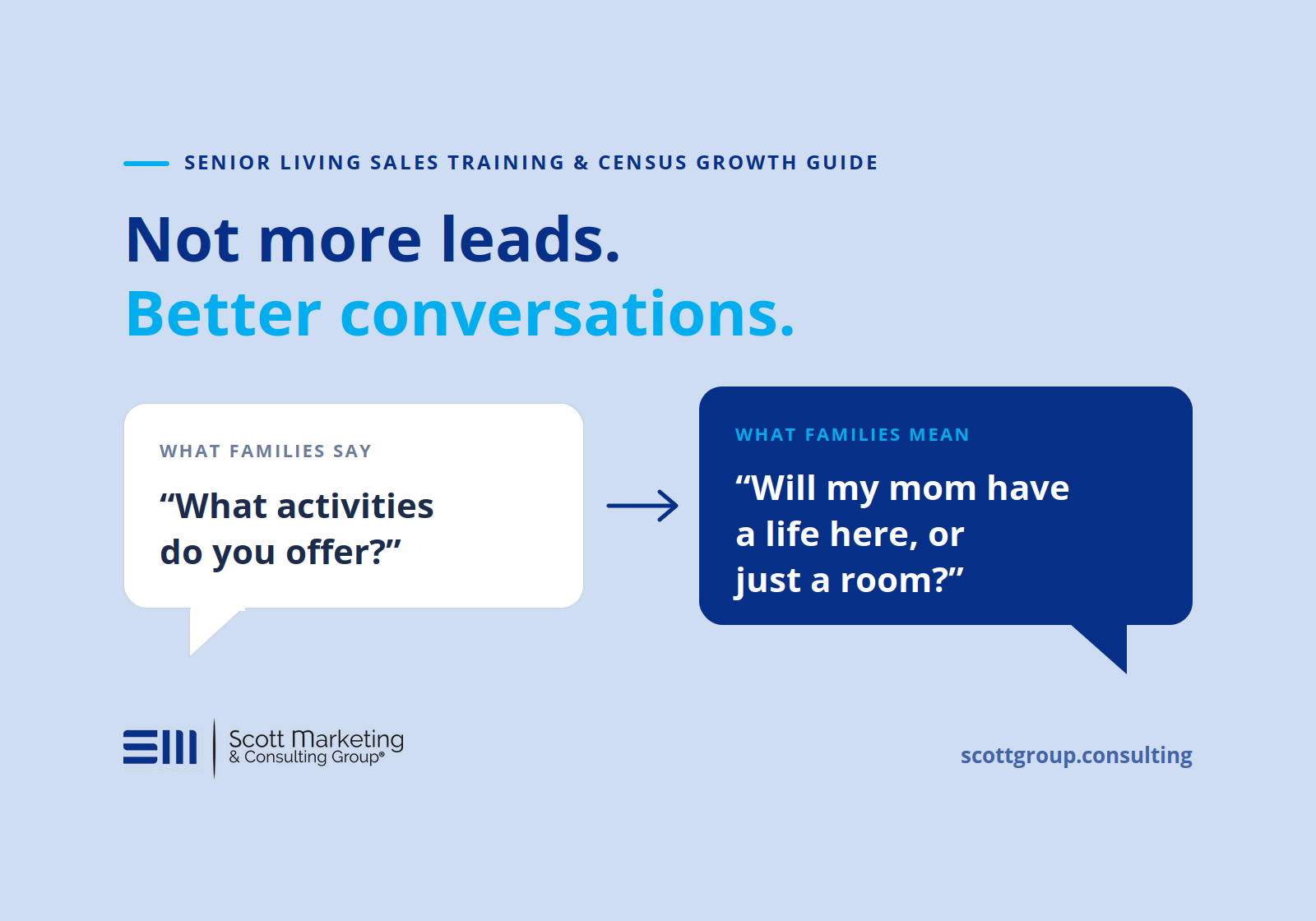
Sales training fades without reinforcement. See how ongoing sales coaching improves senior living conversions and census.

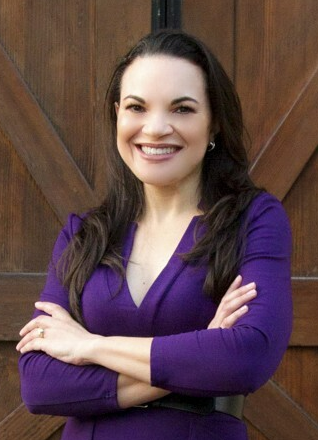
Before founding SMCG®, Sandra served as VP of Sales & Marketing for three CCRCs, where she trained sales teams, managed marketing and sales generating $52M+ in annual revenue, and achieved 92% presales two years before a community's opening.
The sales teams I led that held their conversion rates didn't have better training than everyone else. They had someone coaching them every week.
That's the pattern behind one of the most common frustrations I hear from operators: "We’ve done sales training before. Why are tour conversions still falling?" Because training is an event and selling is a discipline. The skills that fill a community like discovery, listening, follow-up and handling fear and guilt with grace fade quietly between busy weeks. Ongoing coaching is that reinforcement, and it's often the highest-return investment most communities aren't making.
Every operator has lived this cycle. A trainer comes in, the team is energized, conversions tick up for six weeks, and then everything drifts back to baseline.
It's not a motivation problem. It's how skills work. Education researcher Benjamin Bloom documented this in 1984. In his study published in Educational Researcher, students who received one-on-one tutoring with regular feedback and correction performed two standard deviations above students taught in a conventional classroom, meaning the average tutored student outperformed 98% of the classroom group. His subjects were students, not salespeople, but the principle holds true: people improve most when someone works with them individually and keeps working with them. Under occupancy pressure, teams revert to their most practiced habits: leading tours with amenities, quoting pricing before building trust, letting follow-up slide when the building gets busy. The new skills never became the most practiced habits, because no one practiced them past the workshop.
I trained sales teams inside three CCRCs, and the lesson was unambiguous: the difference between teams that sustained performance and teams that didn't was never the quality of the initial training. It was whether anyone was still coaching in month four. Hitting 92% presales two years before a community opened didn't come from one great workshop. It came from consistent, week-over-week reinforcement.
Looking back, I can’t point to a single workshop that changed census. I can point to dozens of coaching conversations that changed how a salesperson handled the very next family they met. Those small adjustments compounded over time, and the census number followed.
Communities don't lose occupancy suddenly. They lose it quietly, through small breakdowns in conversations and follow-up that no one is coaching against.
So, when your conversions start slipping, don't ask when your team was last trained. Ask who coached them this week. If the answer is nobody, you've found the leak.
Coaching shows up in four measurable places:
The thread connecting all four is discovery: the ability to uncover what a family actually needs beneath what they say, which is the heart of why discovery conversations drive conversion and the skill that decays fastest without practice.
Coaching isn't a soft investment in morale. Every one of these four outcomes has a line on your census report.
Quick Coaching Audit
Before you assume you need more leads, ask:
If those questions are difficult to answer, you may not have a training problem. You may have a coaching problem.
Coaching doesn't produce a spike. It produces a slope.
Here's how it compounds, and it's the Occupancy Flywheel™ in motion: a coached team converts slightly better this month. Families who were well served leave reviews and tell people they trust. Those referrals arrive warmer, often convert more readily than paid leads, and carry no placement fee. Higher census funds better staffing and programming, which improves the experience families talk about. Each turn of the flywheel makes the next one easier.
Twelve months in, the community isn't just a little better. It's operating in a different gear. Coaching is what keeps the Occupancy Flywheel™ turning. Without reinforcement, conversations weaken, referrals slow, reviews become less specific, and occupancy growth becomes harder to sustain.
Coaching does not change your team overnight. It changes your census over time.
That's also why coaching is so often undervalued: its results are cumulative, while its cost is immediate. In my experience, communities that measure it over a quarter often cancel it. Communities that measure it over a year usually wish they'd started sooner. If you start, commit to twelve months and track the compounding through the sales metrics that actually predict occupancy so the slope stays visible to you and your owners.
The communities that get the most from coaching share recognizable habits:
Notice that none of these require budget. They require rhythm and leadership. Which means the gap between your community and a high-coaching culture is a calendar decision, not a financial one.
Run the math on your own community. At a monthly rate of $5,000 to $7,500, one additional move-in represents $60,000 to $90,000 in revenue in its first year alone, and often more, since residents stay for years. A coaching investment that improves tour conversion by even a few percentage points can pay for itself many times over.
Compare that to the alternative most communities choose: spending more on lead generation while the same conversations keep falling short.
Buying more leads to compensate for underdeveloped conversations is the most expensive way to grow census.
You pay for the lead, then lose it anyway. Coaching strengthens the conversations themselves, so every marketing dollar you already spend converts better, which is the core argument of our full census growth framework.
Before your next budget meeting approves another lead-generation increase, price out what fixing conversion would cost instead. For most communities it's a fraction of the spend, with results that compound instead of expire. If you want to see where your own system is leaking, evaluate your coaching culture and sales system with the Senior Living Census Growth Scorecard.
Sales coaching matters in senior living because these conversations carry emotional weight most industries never face: fear, guilt, family conflict, urgency. Those conversations require skills that decay under pressure, and coaching is what keeps those skills sharp from one family to the next.
Senior living sales teams should be coached weekly or biweekly, in short working sessions built on real current situations. Quarterly check-ins aren't coaching; by the time they happen, three months of habits have already hardened.
Yes, by improving what happens between a family's first call, their tour, and their move-in. Communities don't usually need more leads to grow census; they need to stop losing the leads they already have, and that's precisely what coaching addresses.
Training transfers knowledge in an event; coaching builds skill through ongoing practice, feedback, and accountability. Training starts the change. Coaching is what makes it stick.
Behavior changes within weeks, and census results build over months. In the teams I've coached, conversion improvement usually shows up within a quarter, with the larger census impact building across six to twelve months as referrals and reviews compound.
I've sat in your chair. I know the weight of an occupancy target, and I know what consistent coaching did for the teams I led. If you'd like an honest conversation about where your team's conversations are slipping, bring what you're seeing in your tours and follow-up, and schedule a free 20-minute consultation.
Sandra Scott is the CEO and Founder of Scott Marketing and Consulting Group® (SMCG®), a senior living and healthcare marketing agency serving small and midsize providers across the United States. Before founding SMCG®, she served as VP of Sales & Marketing for three CCRCs, where she trained sales teams, managed marketing and sales generating more than $52 million in annual revenue and achieved 92% presales two years before a community's opening. She was named 2023 Innovator of the Year by the Residential Assisted Living Association, and SMCG® was recognized as a Top GEO Agency (2026) by First Page Sage.
Explore More Strategies for Sales Performance & Census Growth:
.jpg)