August 6, 2026
The Role of Landing Pages in Assisted Living Marketing


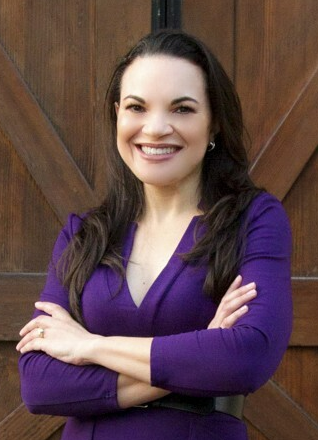
Former VP of Sales & Marketing for three CCRCs, managing $52M+ in annual revenue.
Families do not say no to what they need. They say no to what they don’t understand or trust.
That’s the uncomfortable truth behind most stalled tours, unreturned calls, and “we’re going to think about it” conversations in senior living sales. The family in front of you almost always needs the care. What they don’t have yet is the confidence that your community and your conversation actually understands why they’re sitting there.
I call this the Need Behind the Need™. It’s the framework I built across years in hospitality sales and furthered as VP of Sales & Marketing for three continuing care retirement communities, where I trained sales teams, sat in hundreds of family meetings, and hit 92% presales two years before a new community opened. The teams that learn it convert more tours, earn more referrals, and stop losing families they were truly meant to help.
The Need Behind the Need™ is the emotional, unspoken reason driving a family’s decision, the one underneath the practical reason they give you. The surface need is what they say to you. The real need is what they feel.
A daughter says, “Mom needs help with medications.” That’s the surface need. The real need might be: “I’m terrified she’ll fall again when I’m not there, and I can’t carry this guilt alone anymore.”
Most communities answer the surface need with a feature list. The best teams answer the real need with understanding.
This is also the quiet starting point of the Occupancy Flywheel™. Trust starts forming in the very first conversation, long before a family ever tours your community. What this means operationally is if your team’s first response to an inquiry is a fee schedule and a brochure, you’re answering a question the family didn’t ask and handing the trust-building moment to whichever competitor answers the real one.
Because the truth is heavy. Because they’re tired. Stressed. Overwhelmed. In my years inside senior living operations, I learned that families walk into your community carrying four things they rarely name out loud:
A family won’t tell you they feel like they’re failing their mother. But that feeling is steering the entire decision. If your team only responds to the stated question, the real objection never gets addressed and unaddressed objections become quiet exits. For your community, that’s the difference between a pipeline full of “thinking about it” and a pipeline that moves forward.
Here is what most sales training misses, those four feelings of fear, guilt, resistance, or uncertainty do not arrive at the moment they call you. They form upstream, quietly, in the weeks and months before a family ever contacts your community.
A daughter reads reviews at midnight. She visits your website a dozen times without filling out a form. She watches a virtual tour, looks up your administrator’s name, compares your menu to two other communities, and reads every response you’ve ever written to a Google review. She does all of this alone, in the in-between moments of her day, trying to make sense of something she doesn’t yet have words for.
By the time she calls, she has often already made a provisional decision. What the conversation determines is not the decision itself, it’s whether she feels confident enough to act on it.
This is what I mean when I say the inquiry is not the beginning of the decision. It is often the first visible sign of a process that started weeks or months earlier in a place no system recorded, because nothing happened that a CRM could see.
What this means for your team is when a family finally sits across from you, they are not at the beginning of their emotional journey. They are somewhere in the middle of it and the Need Behind the Need™ is the emotional weight they have been carrying through the entire invisible stretch that came before. Your job is not to start that conversation. It is to recognize how far it has already come.
What the family says (surface need)What’s actually driving it (real need)“Mom needs help with meals and medications.”“I’m exhausted, and I’m afraid something will happen on my watch.”“We’re just gathering information.”“We’re not emotionally ready to admit this is happening.”“Dad doesn’t want to leave his house.”“We feel guilty overriding his wishes, give us a reason this is the right thing.”“What’s included in the monthly fee?”“We’re scared of running out of money and need to trust you’re being straight with us about costs.”“We’re looking at a few other communities.”“Nothing has made us feel understood yet.”
Train your team to hear the real need, and every conversation on this table becomes one where you can genuinely help. Respond only to the surface need, and you’ll keep losing families who genuinely needed your help.
The operational cost is real, and it compounds. Tours that don’t convert. Follow-up calls that go to voicemail. CRM pipelines full of “thinking about it” leads that quietly age out. Marketing dollars spent generating inquiries your sales process can’t hold onto.
Here’s what I saw repeatedly as an operator: communities blame the lead source, the campaign, the pricing, or the competition when the actual leak is the conversation itself. This is why so many communities pour money into lead generation when the real issue is conversion, a pattern I break down fully in our senior living census growth guide.
Families rarely reject a community. They reject how the conversation made them feel.
Many families walk in already leaning toward a decision they quietly formed at home. What the conversation determines is whether they feel confident enough to act on it.
The bottom line of your marketing budget is this: every dollar spent on new leads flows through your conversations. If those conversations leave families feeling unheard, more leads just means more families leaving without the help they came for.
Three skills separate the teams that uncover the need behind the need from the teams that miss it:
These are learnable skills but they’re also perishable ones, which is why coaching reinforces sales skills instead of letting them decay after a one-time training. The operational takeaway is that discovery isn’t a personality trait you hire for. It’s a discipline you build and maintain, and the communities that maintain it convert tours their competitors lose.
Because families talk about how you made them feel, not your amenity list. When a family feels genuinely understood during one of the hardest decisions of their lives, they tell their physician, their church group, their neighbors, and they say it in Google reviews with the specific, emotional detail that builds trust with the next family and with the AI systems evaluating your community.
This is the Occupancy Flywheel™ completing its loop. Better conversations create move-ins, move-ins create authentic advocates, advocates create referrals and reviews, and that trust compounds into census growth which feeds the next conversation before it even starts.
What this means for your community is discovery as a skill isn’t just a sales tactic. It’s the single input that powers every downstream growth channel you have from referrals and reviews to reputation and AI visibility; all trace back to how understood families felt during the conversation. If you want to see where your own process is leaking, assess your sales process and referral systems with the Senior Living Census Growth Scorecard.
Families hesitate to move into assisted living because of fear, guilt or uncertainty, not because they don’t recognize the need. Most have promised themselves or their loved one they’d avoid this step, so the decision feels like a betrayal until someone helps them see it as an act of love and safety.
The stated objection is usually a symptom, not the cause. “It’s too expensive” often means “I’m not yet convinced this is worth it” or “I’m scared about money.” Ask a question before you answer one, the real objection is usually one layer down.
Most tours fail because they showcase the building instead of addressing the family’s emotional reality. A tour that’s tailored to what the family actually fears and hopes for converts at a dramatically higher rate than a standard walkthrough.
The Need Behind the Need™ is Scott Marketing and Consulting Group®’s discovery framework identifying the unspoken emotional driver beneath a family’s stated, practical request and addressing it directly in the sales conversation.
Uncovering the Need Behind the Need™ is a learnable skill set of questioning, listening, and pacing that can all be trained and coached. These skills fade without ongoing practice, which is why one-time training rarely changes census.
If your tours aren’t converting the way they should, the answer usually isn’t more leads, it’s better conversations. I’ve sat in your chair, and I’d love to understand where you are and where you want to go. Schedule a free 20-minute consultation with me for an honest conversation about what’s possible for your community.
Sandra Scott is the CEO and Founder of Scott Marketing and Consulting Group® (SMCG®), a senior living and healthcare marketing agency serving small and midsize providers across the United States. Before founding SMCG®, she served as VP of Sales & Marketing for three CCRCs, where she trained sales teams, managed sales and marketing generating more than $52 million in annual revenue and achieved 92% presales two years before a community's opening. She was named 2023 Innovator of the Year by the Residential Assisted Living Association, and SMCG® was recognized as a Top GEO Agency (2026) by First Page Sage.
Explore More Strategies for Improving Sales Conversations:
.jpg)